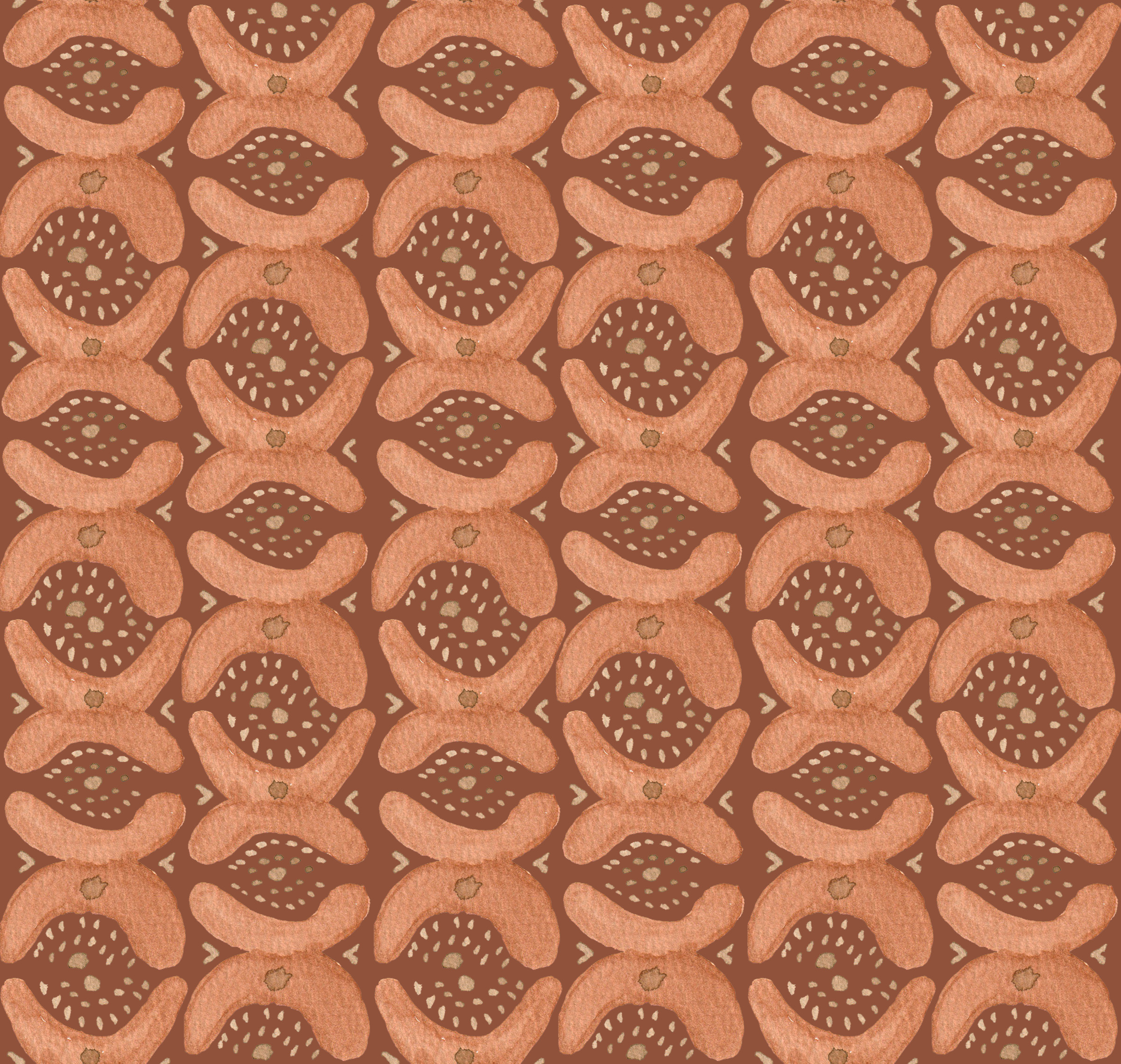
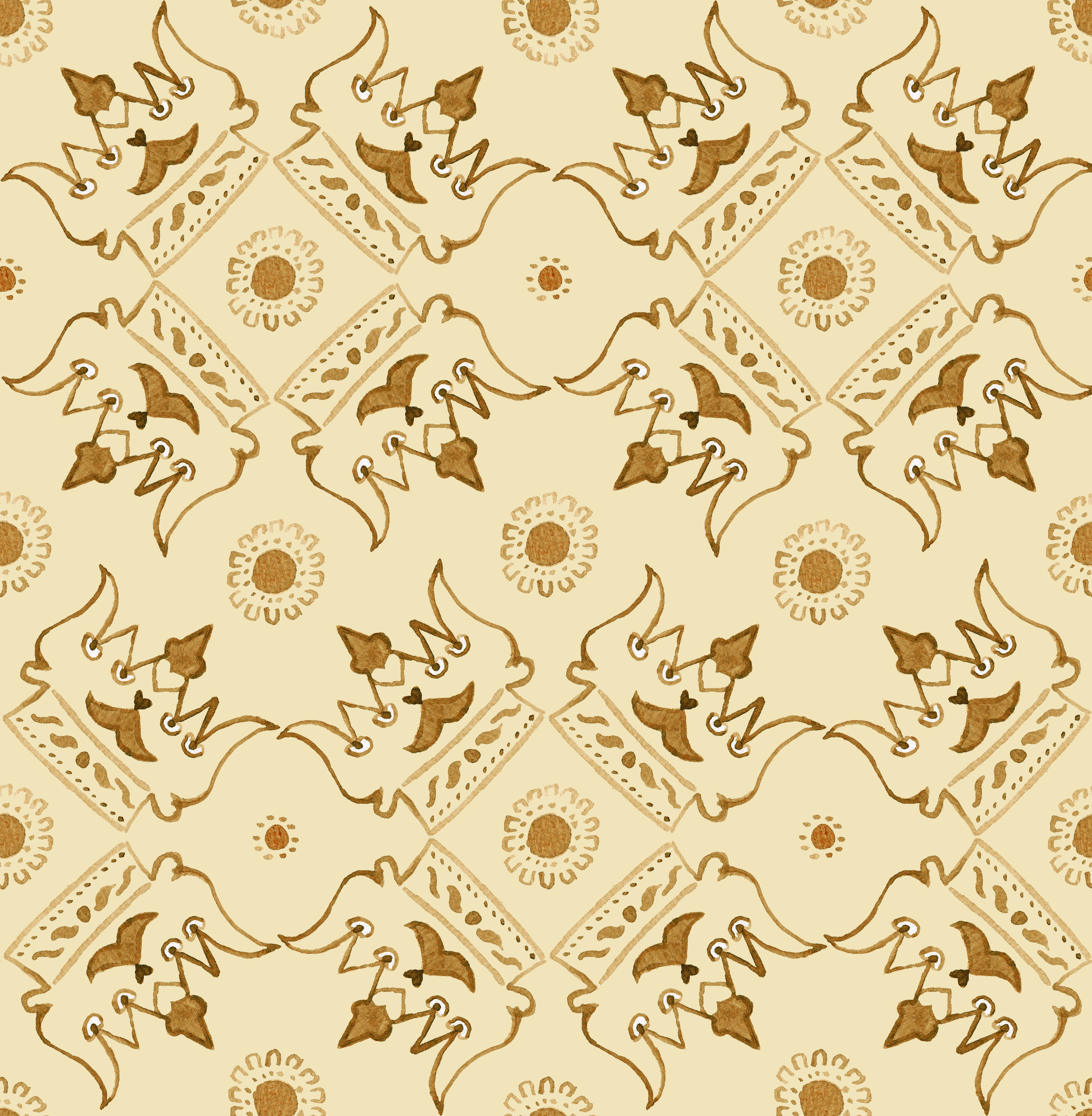
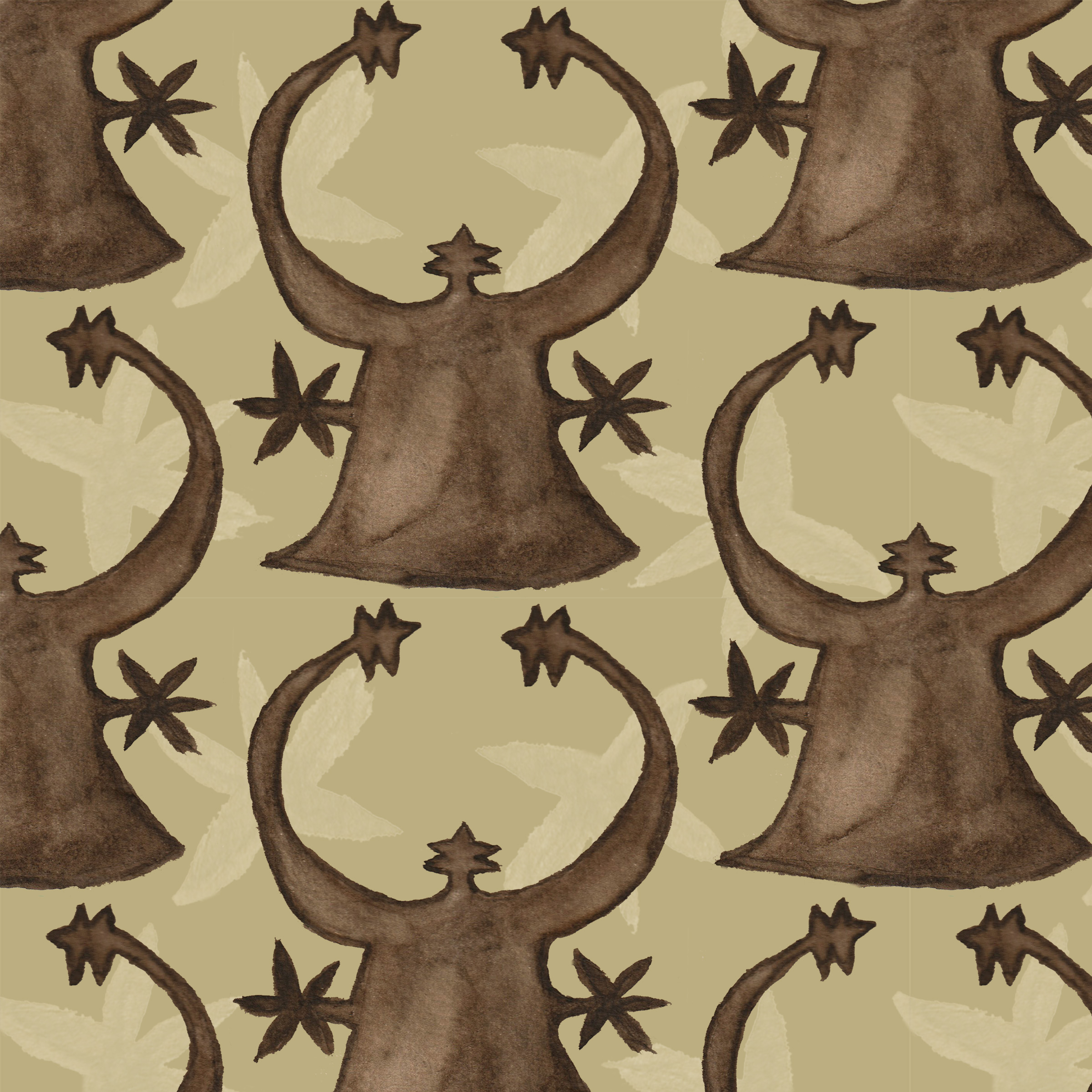
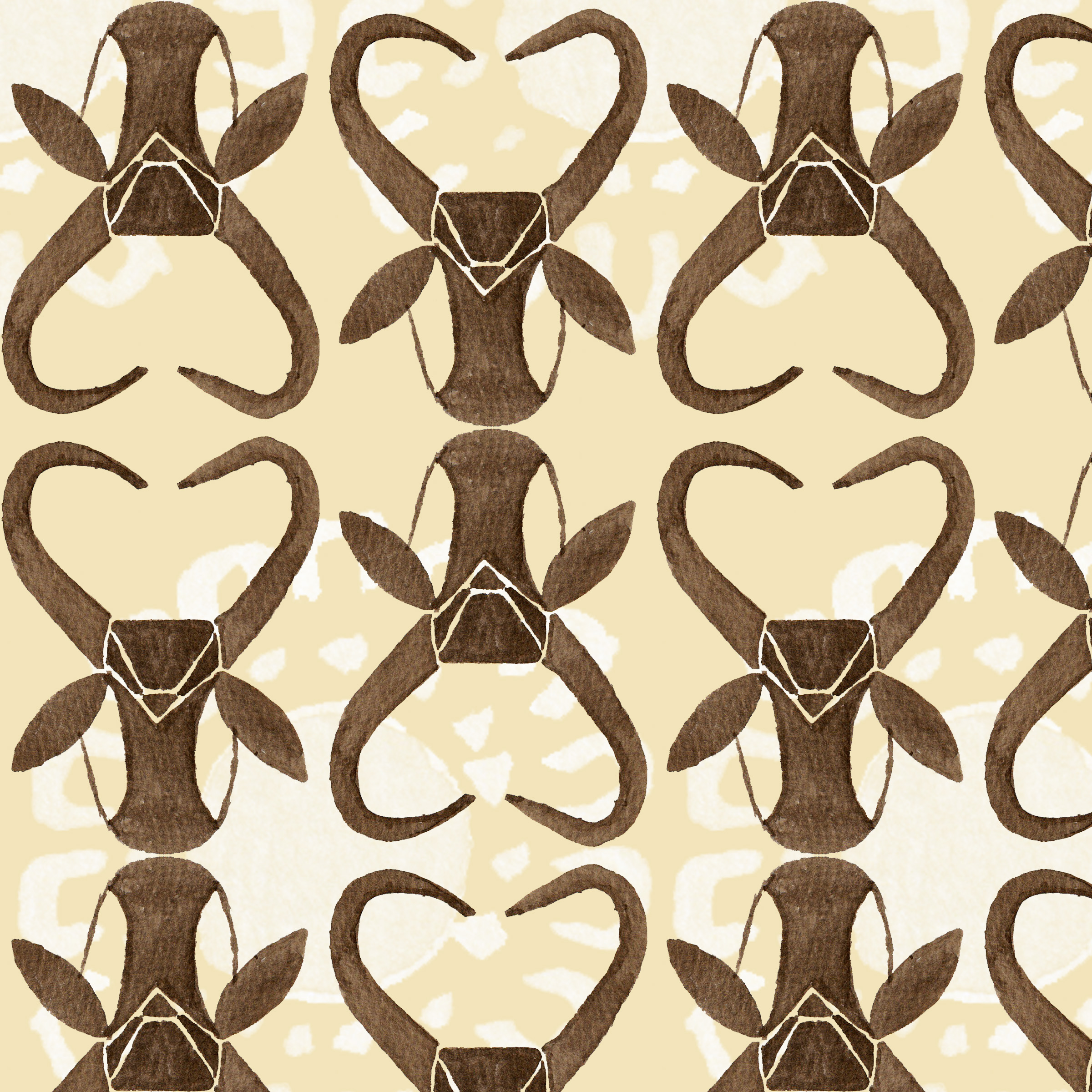
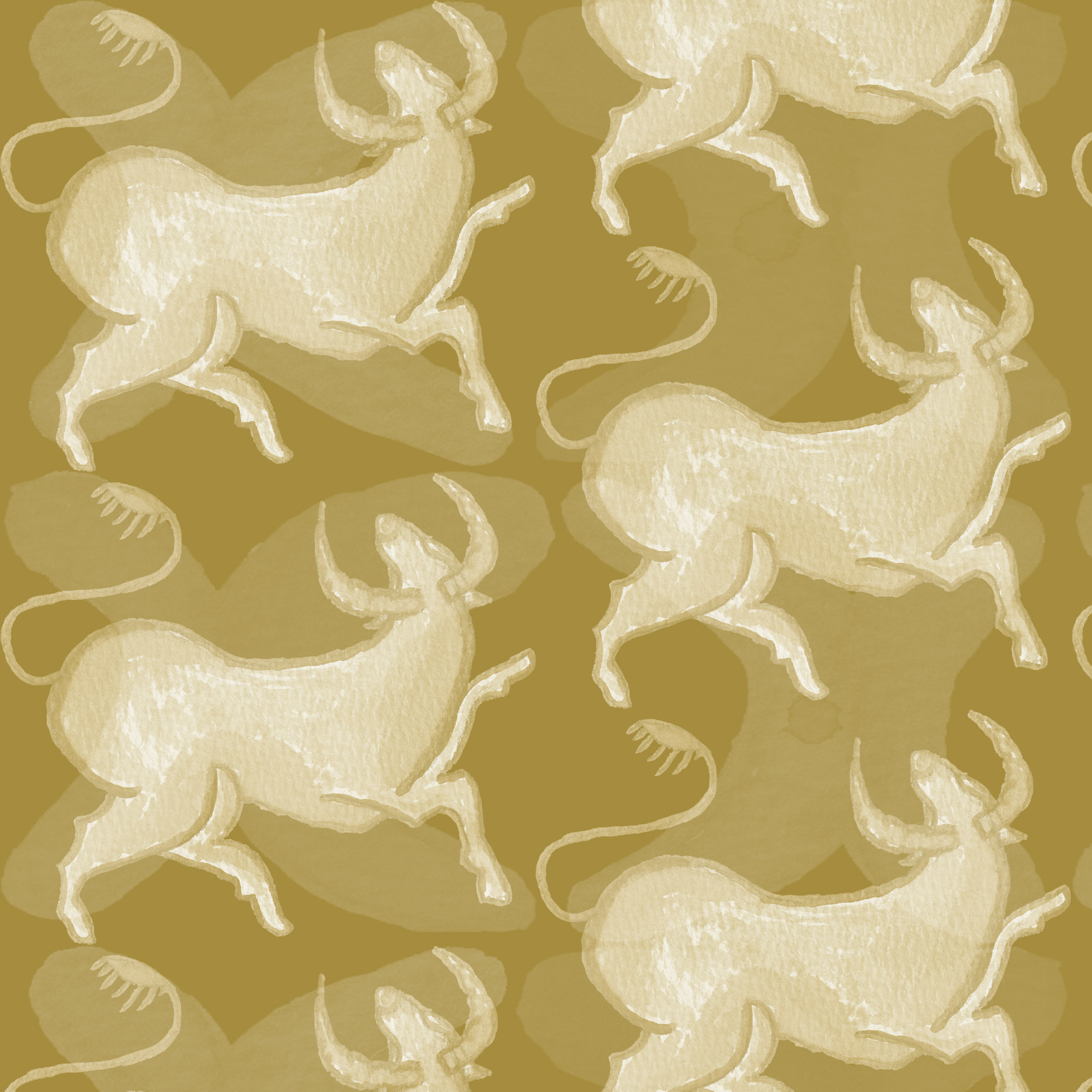
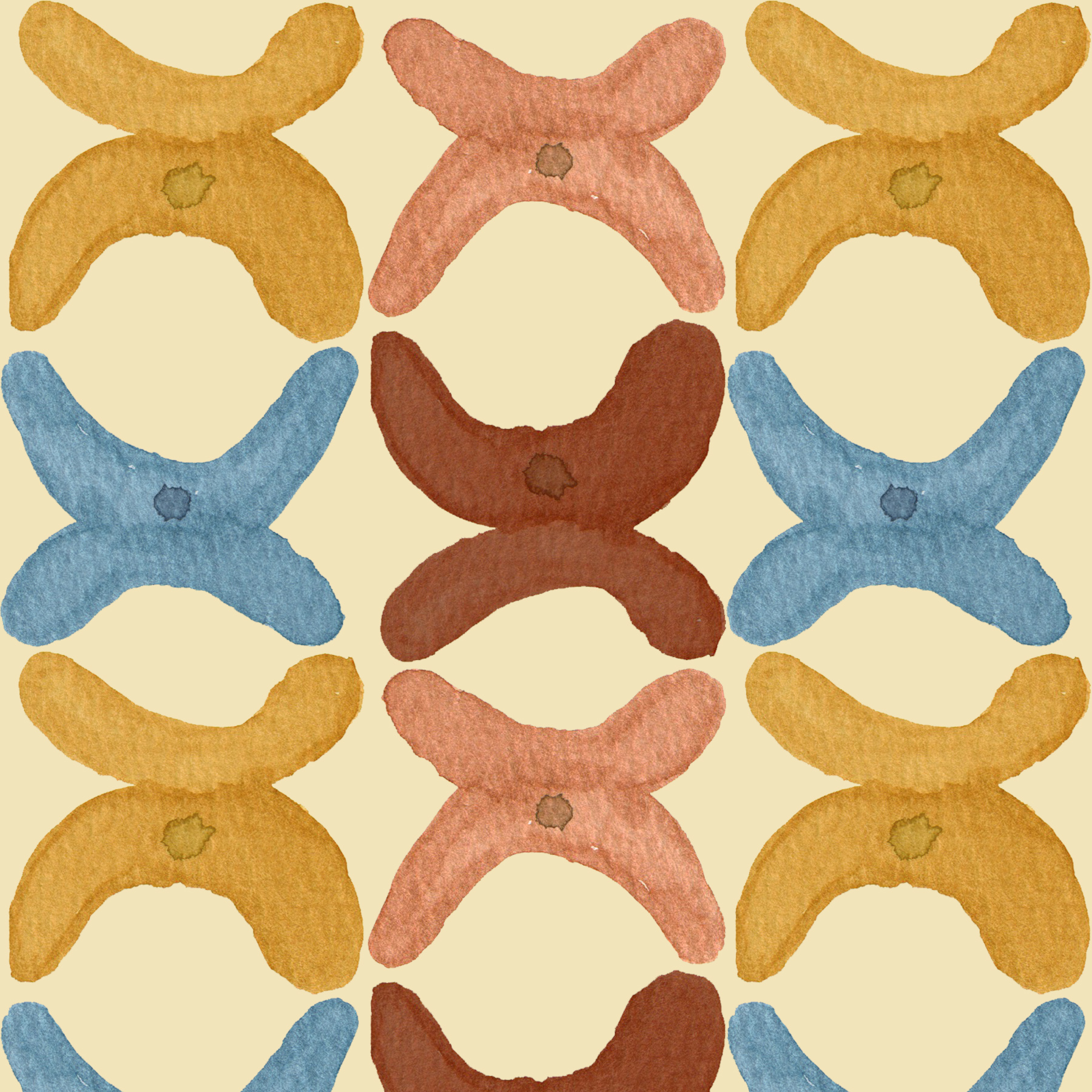
aurochs (bos primigenius) were the wild ancestors of modern domestic cattle, and they went extinct sometime in the late 17th to early 18th centuries. they featured prominently in ancient art across their native range from western europe through swana, the indian subcontinent, and east asia. looking at depictions of sacred bulls in ancient art, i designed a collection of patterns meant to invoke the wonder and respect our ancestors had for these animals.
one of the recurring motifs in art, magic, and storytelling across many cultures is the sacred bull. bovines have been central to daily survival and cosmological imaginations across asia, africa, and europe, and this importance can be seen from prehistoric rock art and megaliths to bronze ceremonial vessels, bull-headed deities, and horn-shaped elements in vernacular architecture. they have frequently served as vessels for ideas about power, fertility, divinity, and the relationship between humans and the natural world.
the humped zebu bull, native to south asia, was carved into stone seals found at indus valley sites harappa and mohenjo-daro.1 in egypt, five thousand years ago and long before the unification of upper and lower egypt, someone ground malachite for cosmetics on a palette depicting a stylized bovine-deity.2 i was born in the year of the ox (1997) which is connected to the earthly element in chinese cosmology, meant to represent perseverence, good fortune, and agricultural abundance. there was a ritual in medieval ireland called the tarb feis (bull feast) in which a bull would be sacrificed and an oracle would sleep in the bull's hide to have a vision of the future king.3 in my home state of negeri sembilan, malaysia, the minangkabau majority take their name in part from kabau, their word for the water buffalo. the importance of bovines can also be seen in minangkabau vernacular homes, rumah gadang, which have distinct, dramatic curved roof lines that end in points, mimicking the shape of buffalo horns.4 with these instances in mind, i want to study extant artefacts that depict aurochs, bulls, and other cattle, as well as stories/myths that reflect their importance in cosmologies past and present.
time as something that is both cyclical and nonlinear features prominently in south asian cosmologies, reflected in concepts like saṃsāra, the endless cycle of life, death, and rebirth. i want this collection to evoke an understanding of history in line with that idea of cyclicality and renewal. the designs are meant to evoke the past while feeling fresh and dynamic, reflecting history as something that is constantly in a state of becoming. i want viewers to feel connected to our ancestors and their worlds, to feel that their worlds were vibrant and teeming with joy and sorrow, that they carried as much complexity and creativity as ours. bulls, aurochs, and other bovines have functioned as bridges between the material and the sacred when used in art, and i want them to continue to serve that function with this collection.
1. zebu bull seal found at indus valley site harappa, www.harappa.com/slide/bull-seal-harappa.
2. the gerzeh or hathor palette has been a favourite of mine for many years, www.egypt-museum.com/the-gerzeh-palette/.
3. english translation and analysis of the medieval irish epic tale ‘the destruction of da derga's hostel, c.1100’, https://archive.org/details/destructionofdad0000ocon.
4. the negeri sembilan state museum (lembaga muzium negeri sembilan) is a good example of this, www.gomalaysia.sg/post/negeri-sembilan-top-places-of-interest-to-visit-on-your-next-trip.
last updated sept 22/26.